
Institute Management
The leadership of IMS CHIPS in Stuttgart has shaped research and development in micro- and nanosystems engineering, sensor technology, and integrated systems for decades.
Meet the institute’s current and former directors and learn more about their research interests, scientific achievements, and contributions to the institute’s development.
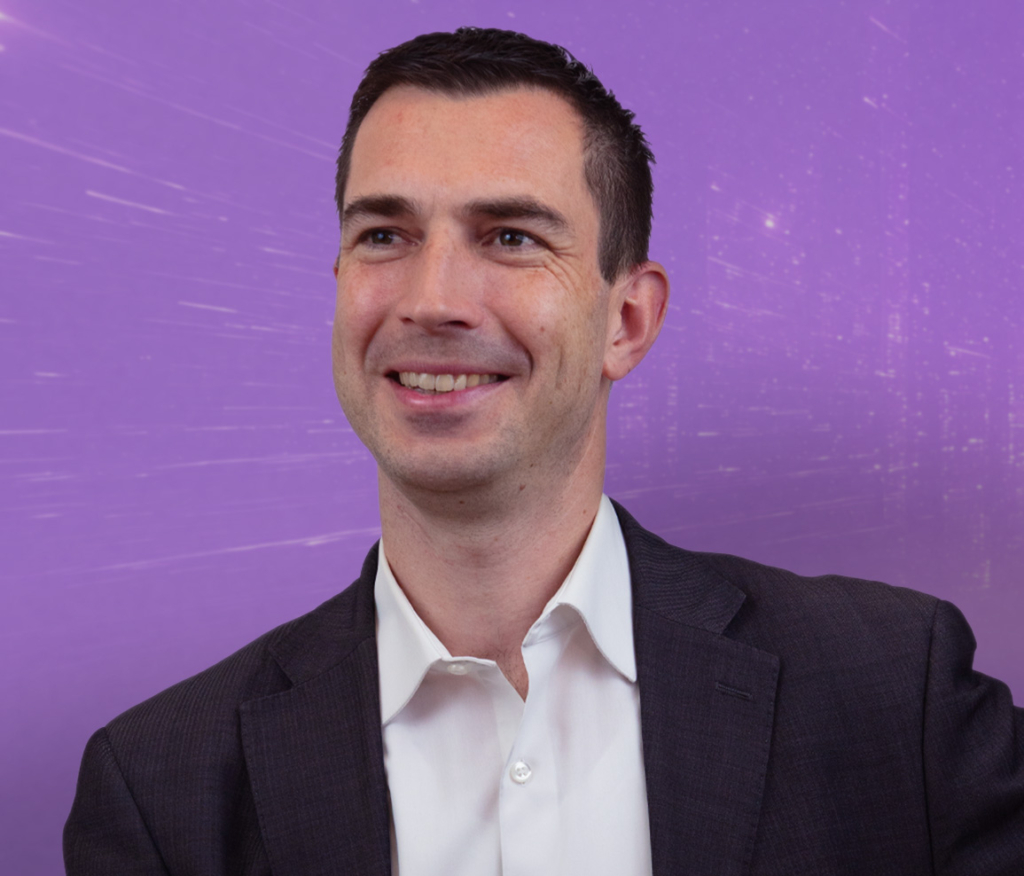
Prof. Dr. Niels Quack
Advancing the integration of photonics with micro- and nanosystems engineering at IMS CHIPS.
2024 – Present
Innovative micro- and nanofabrication processes transform research into scalable technologies for new applications.
h-Index
i10-Index
Publications
Patents
Milestones
- Pioneering research in silicon photonic MEMS
- Establishing scalable approaches to diamond photonics
- Integrating MEMS/NEMS and photonics for energy-efficient, reconfigurable photonic systems
Doctoral Supervision
- École Polytechnique Fédérale de Lausanne (EPFL)
- University of Sydney
- University of Stuttgart
Awards and Recognition
- Top 100 Innovators in Photonics (2024)
- SUPRA Supervisor of the Year Award (2023)
- Sydney Research Accelerator Prize (2022)
Fellowships
- Optica Fellow (2026)
- SPIE Fellow (2025)
Editorial and Conference Leadership
Associate Editor, IEEE Journal of Micro-Electro-Mechanical Systems (JMEMS)
Senior Editor, SPIE Journal of Optical Microsystems (JOM)
Steering Committee Member, IEEE International Conference on Optical MEMS and Nanophotonics (OMN)
General Chair, IEEE OMN 2018
General Chair, Latsis Symposium 2019 on Diamond Photonics
Technical Program Committees
- ECOC
- IEEE MEMS
- CLEO
- SPIE OPTO
- Transducers
- MNE
Biography
Niels Quack received his Master of Science degree from the École Polytechnique Fédérale de Lausanne (EPFL) in 2005 and his doctoral degree from ETH Zurich (Swiss Federal Institute of Technology Zurich) in 2010.
From 2011 to 2015, he was a Postdoctoral and Visiting Researcher at the Integrated Photonics Laboratory and the Berkeley Sensor and Actuator Center (BSAC) at the University of California, Berkeley.
From 2014 to 2015, he worked as a Senior MEMS Engineer at Sercalo Microtechnology in Neuchâtel, Switzerland.
From 2015 to 2021, he held a Swiss National Science Foundation Professorship at EPFL. In 2022, he became Associate Professor of Micro- and Nanosystems at the University of Sydney, Australia.
From 2024, he served as Academic Director of the Research and Prototype Foundry at the University of Sydney. Since April 2025, he has been an Honorary Professor at the Faculty of Engineering, University of Sydney.
Prof. Quack's current research encompasses micro- and nanosystems engineering, with a particular focus on micro- and nanofabrication techniques, novel materials, and the integration of mechanics and photonics at the micro- and nanoscale.
These innovative micro- and nanosystems have applications in fiber-optic communication systems, data centers and high-performance computing, quantum sensing and information processing, and space communications.
Prof. Quack has authored more than 150 journal articles and conference papers and has filed seven patent applications.
He is Associate Editor of the IEEE Journal of Micro-Electro-Mechanical Systems (JMEMS) and Senior Editor of the SPIE Journal of Optical Microsystems (JOM).
He serves on the Steering Committee of the IEEE International Conference on Optical MEMS and Nanophotonics (OMN) and was General Chair of IEEE OMN 2018 and the Latsis Symposium 2019 on Diamond Photonics.
He has served, or continues to serve, on the technical program committees of several international conferences, including ECOC, IEEE MEMS, CLEO, SPIE OPTO, Transducers, and MNE.
In 2024, Prof. Quack was recognized by Electro Optics as one of the Top 100 Innovators in Photonics. He received the Supervisor of the Year Award from the Sydney University Postgraduate Representative Association (SUPRA) in 2023 and the Sydney Research Accelerator Prize in 2022.
In April 2025, Prof. Dr. Niels Quack assumed the position of Managing Director of the Institute for Microelectronics Stuttgart (IMS CHIPS).
Prof. Quack is an SPIE Fellow, an Optica Fellow, an IEEE Senior Member, and a Graduate Member of the Australian Institute of Company Directors (GAICD).
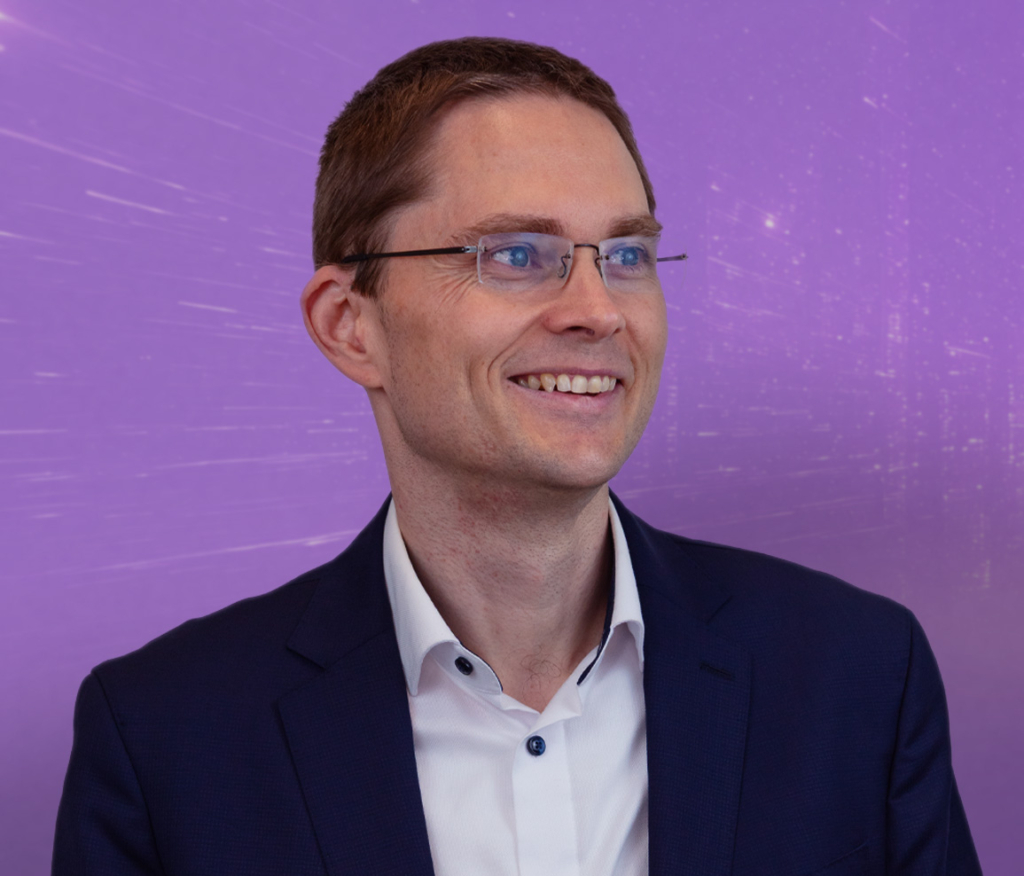
Prof. Dr. Jens Anders
Advancing quantum sensing and integrated sensor systems.
2017 – Present
Our goal is to bring quantum sensing out of the laboratory and make it scalable and practical through microelectronics.
h-Index
i10-Index
Publications
Milestones
- Development of the world’s first portable electron spin resonance spectrometer
- Pioneering research in on-chip EPR and spin detection
- Scaling and microelectronic integration of quantum sensors
Doctoral Supervision
- Ulm University
- University of Stuttgart
Awards and Recognition
- ISSCC Service Award (2026)
- Sony Europe Research Award (2021)
- Best Live Demo Award, IEEE Sensors (2017)
- ITG Literature Award, VDE (2012)
- VDE ITG ISS Student Award (2008)
- E.ON Future Award (2007)
- Award of the VDE Hanover District Association (2006)
- President’s Award, Leibniz University Hannover (2003)
Fellowships and Memberships
- IQST Fellow
- CoPE Fellow
- QPhoton Executive Board
- IEEE Senior Member
- URSI Full Member
Technical Program Committees
- ISSCC
- ESSDERC
- ESSCIRC
- IEEE Sensors
Biography
Jens Anders received his Master of Science degree in Electrical Engineering from the University of Michigan, Ann Arbor, in 2005, and his Diplom-Ingenieur degree in Electrical Engineering from Leibniz University Hannover in 2007.
In 2011, he received his doctoral degree from the École Polytechnique Fédérale de Lausanne (EPFL).
From 2013 to 2017, he was Junior Professor of Biomedical Integrated Sensors at the Institute of Microelectronics at Ulm University.
He currently holds the Chair of Electrical Engineering of Bionic Systems and is Director of the Institute of Smart Sensors and Theoretical Electrical Engineering at the University of Stuttgart.
Since October 2022, he has also served as Co-Director of the Institute for Microelectronics Stuttgart (IMS CHIPS).
Prof. Anders is the author of several books and book chapters, as well as more than 150 journal articles and conference papers.
His current research interests focus on the investigation of multiphysics problems and the design of integrated circuits for sensing applications, with particular emphasis on quantum sensing for materials science and life sciences.
Prof. Anders is a Fellow of the Center for Integrated Quantum Science and Technology (IQST), a Fellow of the Stuttgart Research Center of Photonic Engineering (SCoPE), and a member of the Executive Board of the Carl Zeiss Foundation Center for Quantum Photonics (QPhoton).
He has served, or continues to serve, on the technical program committees of several international conferences, including ISSCC, ESSDERC, ESSCIRC, and IEEE Sensors.
In 2003, he received the President's Award from Leibniz University Hannover, followed by the VDE Hanover District Association Award in 2006, the E.ON Future Award in 2007, the VDE ITG ISS Student Award in 2008, and the ITG Literature Award in 2012.
In 2017, he received the Best Live Demo Award at IEEE Sensors, followed by a Sony Europe Research Award in 2021.